The tennis approach shot is the bridge between baseline play and net dominance. Executed correctly, it puts your opponent under immediate pressure and shortens the point in your favor. This guide covers footwork, spacing, stroke mechanics and tactical options — written by Randy Reynolds, certified tennis instructor and director of Tennis Nation at Reno Tennis Center.
The tennis approach shot is used to transition from the baseline up to the net. A player typically approaches on a ball that lands around the service line or shorter, or when they recognize their opponent is out of position and likely to produce a weak reply.
Moving forward to play a short ball benefits you in three key ways:
- Takes time away from your opponent
- Shortens the duration of the point
- Puts pressure on your opponent’s next shot
Tennis Approach Shot: Footwork
Split Step
Like every shot in tennis, the approach starts with the feet. Time your split step to make contact with the ground at the exact moment you recognize where the ball is headed — this loads your legs and allows you to explode forward toward the short ball.
Ensure Proper Spacing
Once you recognize the ball is short, run forward while assessing exactly where the ball will land. Then run to the ball at an angle so that when you begin to set up for your forehand or backhand you have enough room between you and the ball to swing freely.
Pro Tip: Adjustment Steps
It is common to run into the ball on the approach — causing players to hop up on the stroke or lift their shoulders to create space. The fix: once you turn to face the ball, use small shuffle adjustment steps around and away from the ball. These micro-adjustments let you fine-tune your distance and set up properly every time.
Tennis Approach Shot: Tactical Options
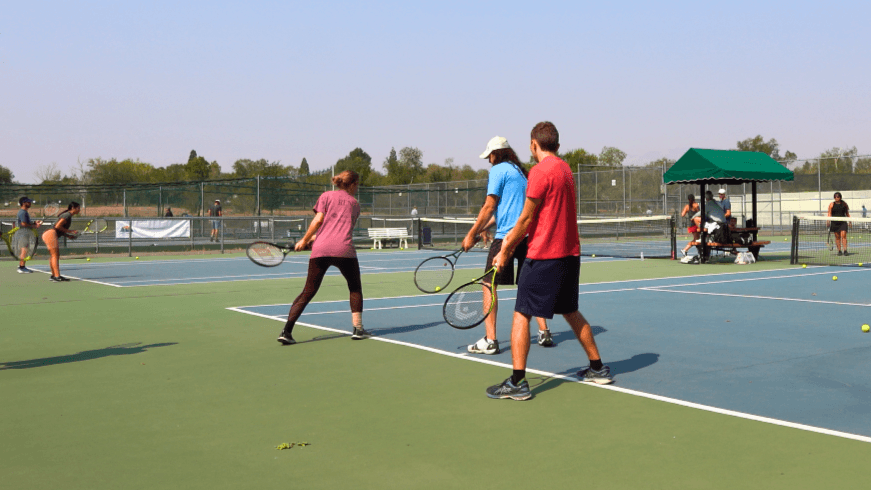
The approach shot is unique because any stroke can be used to approach the net. Some examples:
- Topspin lob approach — effective when your opponent lets balls drop rather than taking them on the rise
- Chip and charge — effective when your opponent struggles to move forward
- Forehand or backhand drive — the most common and direct approach option
The possibilities are endless. For the purpose of this guide we will focus on the forehand and backhand approach.
Tennis Approach Shot: Stroke Mechanics
The approach shot stroke is essentially the same as the forehand and backhand groundstroke — with a few key differences based on ball height and court position.
Recommended stance: Neutral stance — your weight is already moving forward and this stance channels that momentum directly into the ball. Open stance works too — choose based on the ball you receive.
Ideal ball height for the approach: waist to chest height, taken on the rise. The sooner you get to the ball, the less time your opponent has to recover.
The racquet face angle at contact varies based on ball height:
- Ball one foot or more above net height — close the racquet face more and drive through the ball with pace
- Ball at or below net level — open the racquet face to create lift and clear the net
Tennis Approach Shot: Final Thoughts
The tennis approach shot is one of the most exciting and high-leverage shots in the game. If you like to be aggressive and put pressure on your opponent, investing time in this shot will pay dividends at every level of play.
For more free technique guides visit our tennis technique library.
Frequently Asked Questions About the Tennis Approach Shot
When is the right time to hit an approach shot?
The right time to approach the net is when your opponent gives you a short ball landing around the service line or shorter, or when you recognize they are clearly out of position and likely to produce a weak reply. The key is to be decisive — hesitation gives your opponent time to recover and eliminates your positional advantage.
What stance should I use on the approach shot?
The neutral stance is recommended because your body weight is already moving forward — it allows you to channel that momentum directly into the ball. Many professional players also use the open stance on the approach. The most important thing is that your weight is moving toward the net at contact regardless of which stance you choose.
Why do I keep running into the ball on my approach shot?
Running into the ball is one of the most common approach shot mistakes — it usually causes players to hop up or lift their shoulders at contact. The fix is to use small shuffle adjustment steps once you turn to face the ball. These micro-adjustments let you fine-tune your distance and ensure you have enough room to swing freely without compromising your posture.
I want to attack the net with confidence.
The approach shot is a high-leverage skill that develops fastest with live ball feedback from a certified instructor. Work with Randy at Reno Tennis Center and start dictating points from the net.
Excelente análisis del tiro de aproximacion.pegarle cuando bota y sube no esperar cuando baje para quitarle tiempo al oponente y abrir la bola para definirla de volea.gracias