
The tennis grip is the only point of contact between you and the racquet — and most players never give it a second thought. Choosing the wrong grip limits your topspin, flattens your shots at the wrong moments, and makes volleys harder than they need to be. This complete guide walks you through every grip using a simple bevel numbering system — so you can find the right grip for every shot and understand exactly why it works. From the coaching staff at Tennis Nation at Reno Tennis Center.
The Importance of Selecting Your Tennis Grip
The tennis grip you select influences:
- How the racquet swings through the ball
- The angle of the racquet face at contact
- Your optimal contact point for each shot
Some grips naturally swing through the ball producing a faster, flatter ball. Others naturally swing low to high generating more topspin. Before choosing a grip, think about your style of play:
- All-court attacking player like Roger Federer → grip between Eastern and semi-Western — swings through aggressively
- Baseline grinder like Rafael Nadal → grip close to Western — extreme topspin, greater net clearance, consistency
No tennis grip is perfect — there is always wiggle room. The goal is finding which grip complements your game the best.
A System for Grasping Tennis Grips
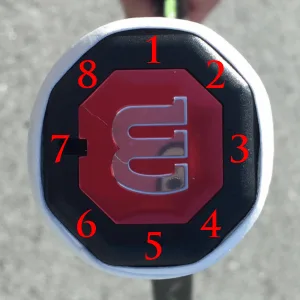
The racquet handle has 8 bevels — use this system to find any grip consistently.
The racquet handle is an octagon — divided into 8 bevels. With the racquet face perpendicular to the court, call the top bevel number one and number them clockwise through eight. This gives you a consistent system for finding every grip.
Two reference points on your palm:
- Heel pad — padded fleshy portion just before your wrist, along the bone connecting to your pinky finger
- Index knuckle — padded portion of your palm just below your index finger

Tennis grips are defined by which bevel your heel pad and index knuckle rest on.
Tennis grips are defined by which bevel your heel pad and index knuckle rest on. Many players develop slightly modified grips between formal positions — this is perfectly normal and expected over time.
Continental Tennis Grip
Used for: serves, volleys, overheads, slices and the dominant hand on the two-handed backhand.
Finding the Continental Tennis Grip
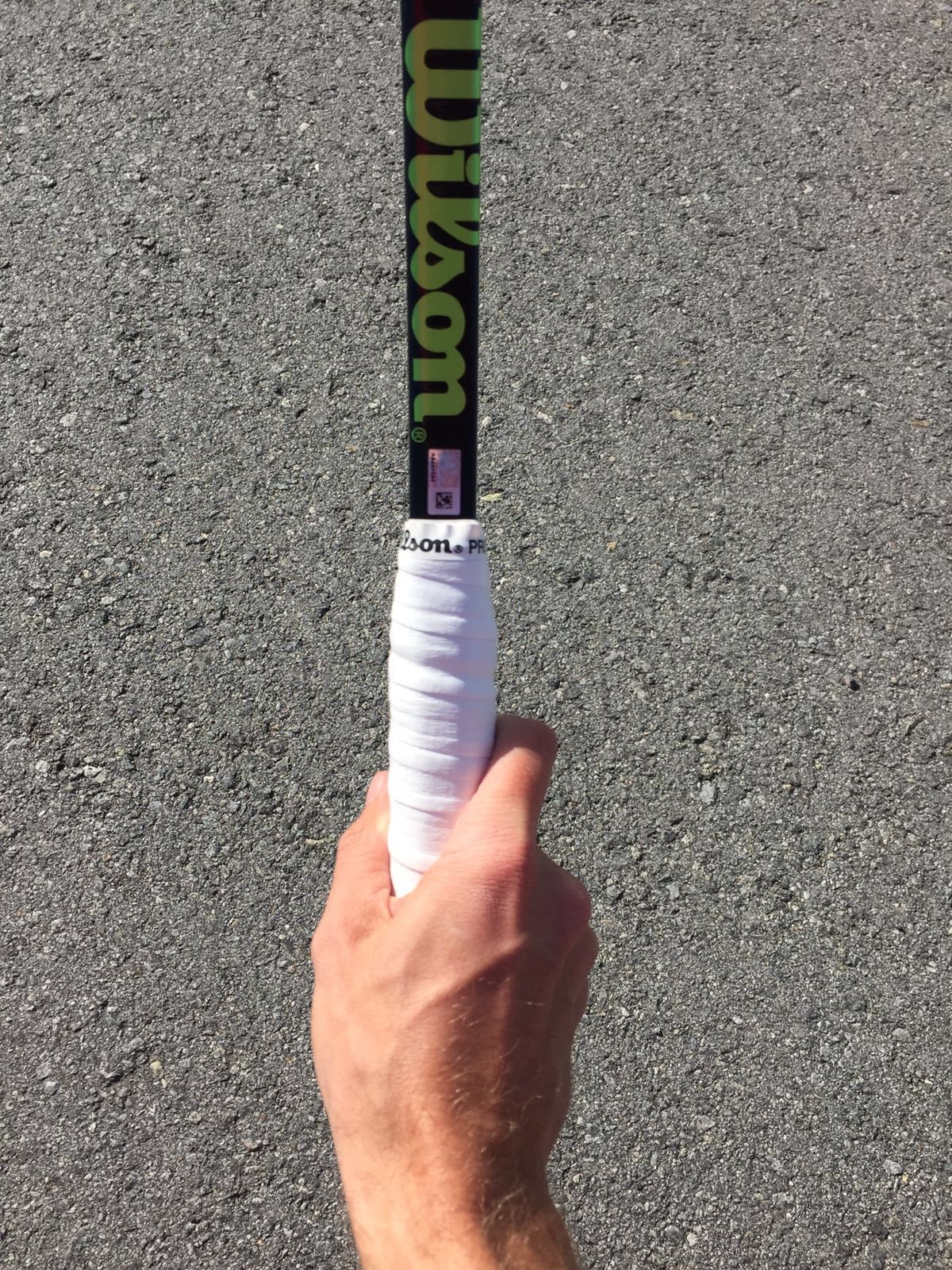
Continental grip: heel pad and index knuckle on bevel 2 (bevel 7 for lefties).
Place your heel pad and index knuckle on bevel 2 (bevel 7 for lefties).
Pro Tip: A V shape is created by your thumb and forefinger on the top of the handle when holding the Continental grip.
- Strengths: Low balls, backspin
- Weaknesses: High balls, topspin
Eastern Forehand Tennis Grip
Popular choice for attacking players. Optimal contact point: waist high and out in front. Naturally swings through the ball producing a relatively flat hit. Great for beginners and attacking players.
Finding the Eastern Forehand Tennis Grip
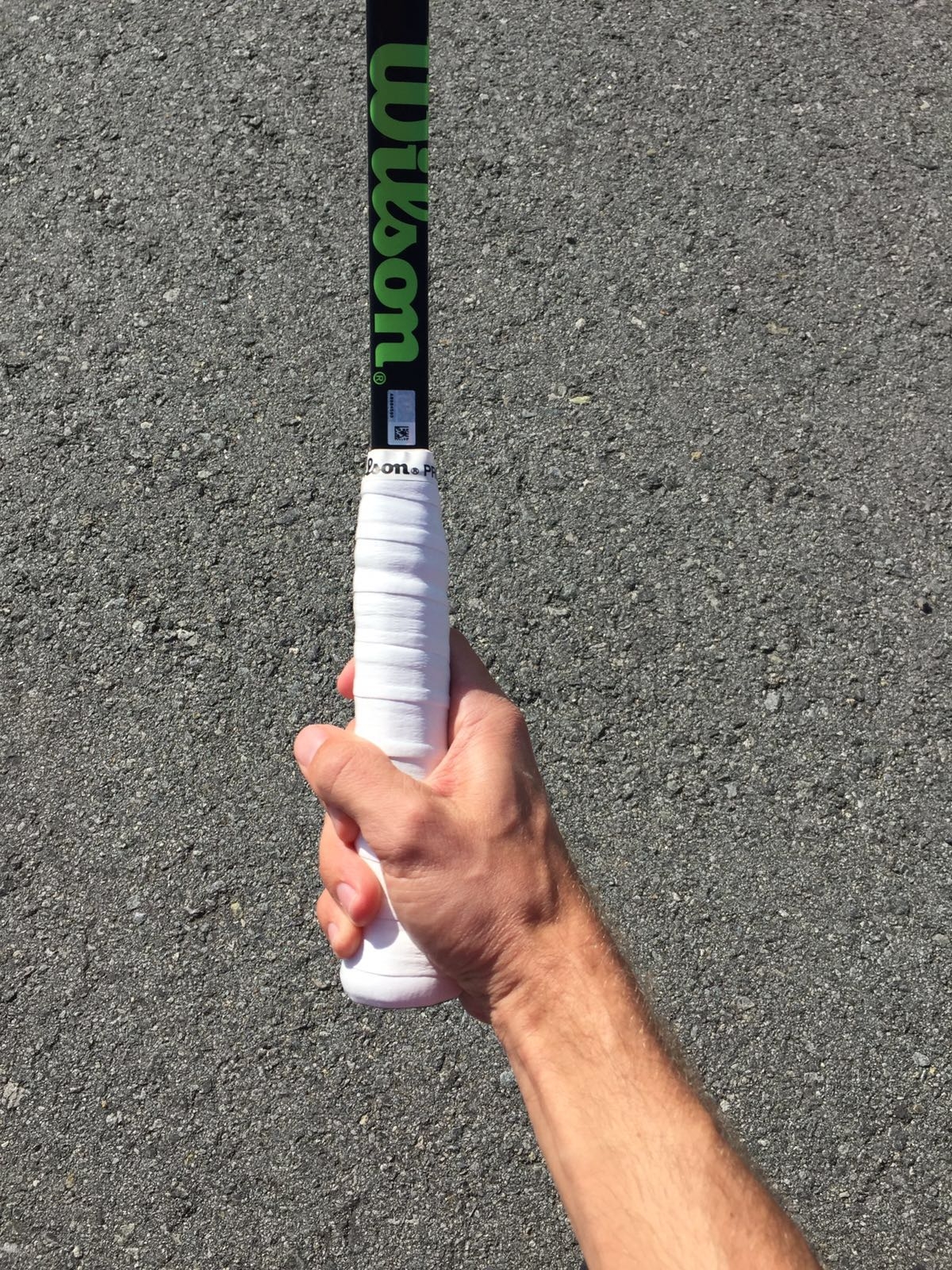
Eastern forehand grip: heel pad and index knuckle on bevel 3 (bevel 7 for lefties).
Place your heel pad and index knuckle on bevel 3 (bevel 7 for lefties).
Pro Tip: Shake hands with the grip — or place your hand flat against the strings and slide it down. Either naturally finds the Eastern forehand.
- Strengths: Versatility between topspin and flat balls, quick transition to other grips
- Weaknesses: Generating extreme topspin, difficult to strike balls above chest level
Semi-Western Forehand Tennis Grip
The most popular grip on the professional tour today. Contact point: waist to shoulder height, slightly further out in front than Eastern. Naturally swings low to high creating greater topspin. Effective for all styles on all surfaces.
Finding the Semi-Western Forehand Tennis Grip
Semi-Western forehand grip: heel pad and index knuckle on bevel 4 (bevel 6 for lefties).
Place your heel pad and index knuckle on bevel 4 (bevel 6 for lefties). Try spreading your fingers out to cover more surface area — many find this more comfortable.
Pro Tip: Place your racquet flat on a table or the ground and pick it up — this naturally rests your hand near a semi-Western.
- Strengths: Versatility between flat and topspin, high balls, short topspin angles
- Weaknesses: Difficult to pick up low balls, greater transition to Continental at net
Western Forehand Tennis Grip
Favored by clay-court specialists wanting extreme topspin. Contact point: around shoulder height. Not typically used by players who attack the net regularly due to the severe transition to Continental.
Finding the Western Forehand Tennis Grip

Western forehand grip: heel pad and index knuckle on bevel 5 (bevel 5 for lefties too).
Place your heel pad and index knuckle on bevel 5 (bevel 5 for lefties as well). Spread your fingers out to cover more surface area.
Pro Tip: Hold the racquet face pointing toward the ground. Extend your dominant hand making a fist pump — then grip the handle from that position.
- Strengths: Extreme topspin, high balls, higher net clearance
- Weaknesses: Low balls, difficult to flatten shots, requires strong wrist and racquet head speed, significant transition to Continental at net
Eastern Backhand Tennis Grip
Most popular grip for the one-handed backhand. Contact point: waist high and out in front. Naturally produces a relatively flat hit. Great all-court option for all ages and abilities. Minor transition to Continental at net.
Finding the Eastern Backhand Tennis Grip
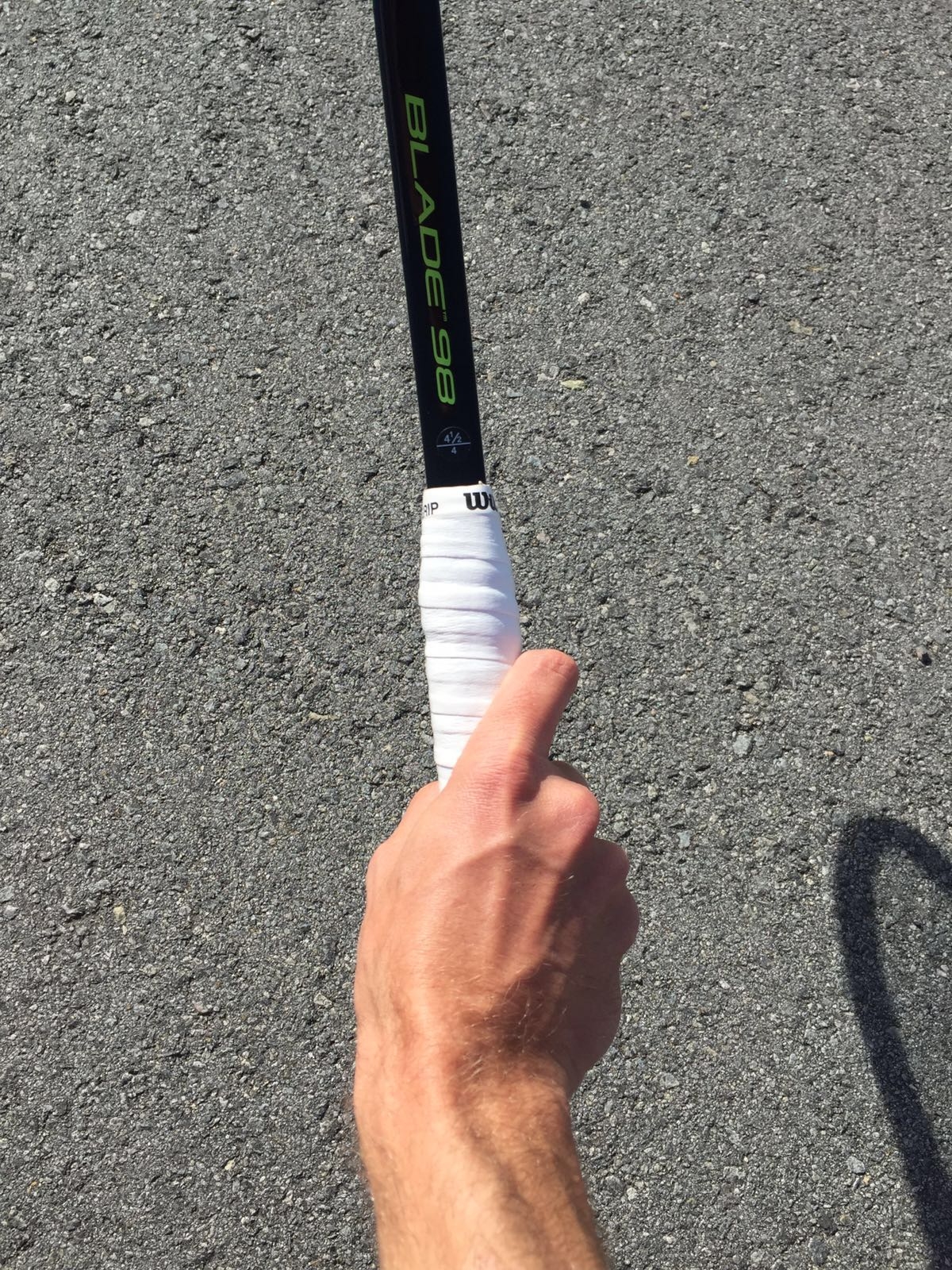
Eastern backhand grip: heel pad and index knuckle on bevel 1.
Place your heel pad and index knuckle on bevel 1. Hold the throat with your non-dominant hand just below shoulder height, strings perpendicular to the ground — place your dominant hand on the grip with wrist straight.
Pro Tip: Find the Western forehand grip and simply turn your hand and racquet over to your backhand — you have the Eastern backhand grip.
- Strengths: Topspin and flat balls, can be used for the slice, easy transition to Continental at net
- Weaknesses: High balls
Semi-Western Backhand Tennis Grip
Popular among clay-court players. More advanced than the Eastern backhand — requires greater upper body strength. Contact point: higher and farther out in front, naturally producing greater topspin.
Place your heel pad and index knuckle on bevel 8 (bevel 2 for lefties).
Pro Tip: Find the semi-Western forehand grip and simply turn your hand and racquet over to your backhand.
- Strengths: High balls, topspin
- Weaknesses: Low balls, more significant grip change to Continental at net
Two-Handed Backhand Tennis Grip
Extremely popular at all levels — particularly for players who lack upper body strength for a one-handed backhand.
- Dominant hand: Continental or Eastern backhand grip
- Non-dominant hand: Eastern forehand or semi-Western forehand grip
Anywhere in between works — find what feels most natural and allows both arms to strike through the ball smoothly.
Finding the Two-Handed Backhand Tennis Grip
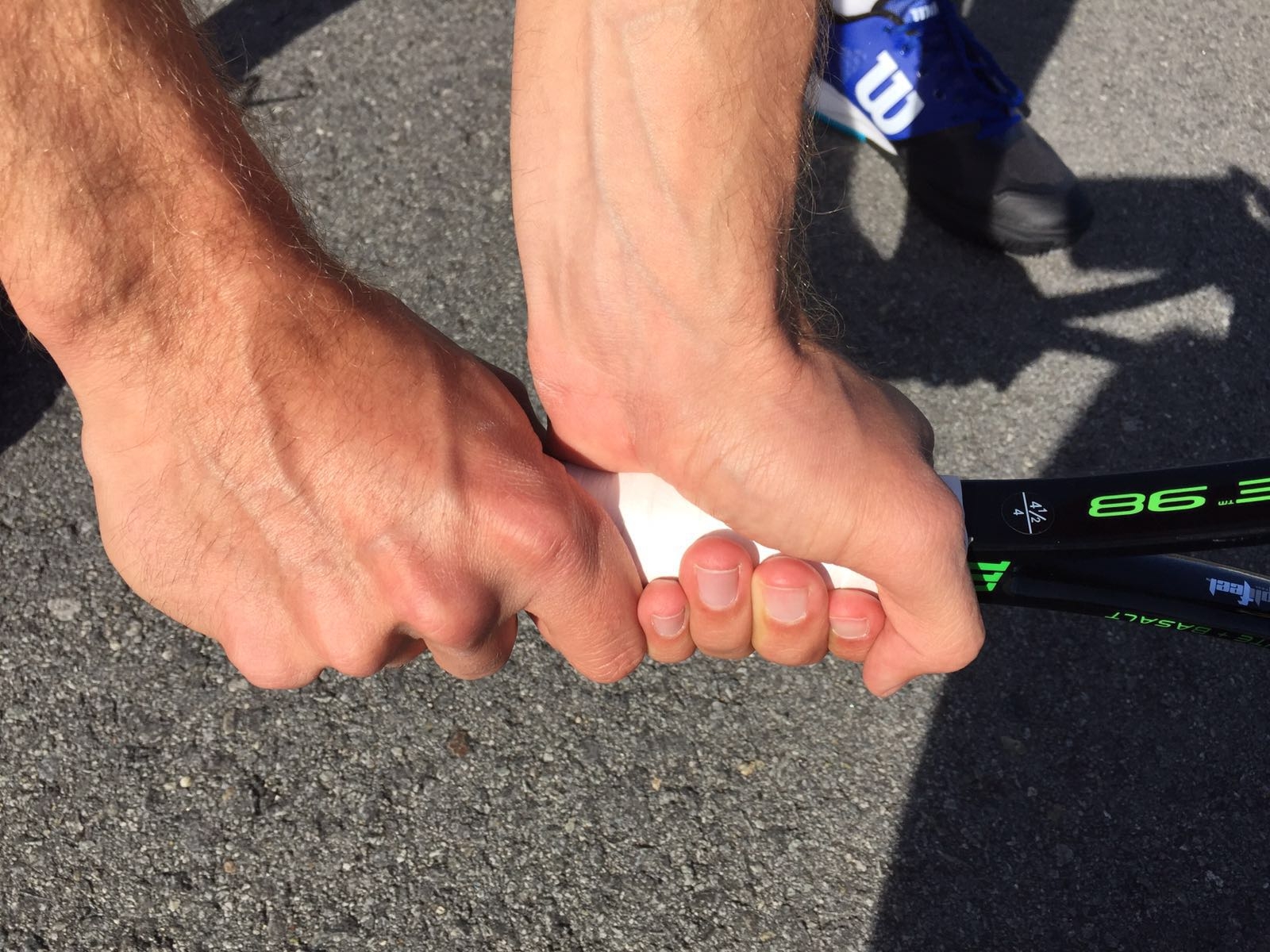
Two-handed backhand: dominant hand Continental or Eastern backhand, non-dominant hand Eastern or semi-Western forehand.
Pro Tip: No space between your dominant and non-dominant hand — the hands should be touching but not overlapping.
- Strengths: Topspin and flat balls, handles low and high balls below shoulder height
- Weaknesses: Limits reach, more difficult to transition to the slice than the one-handed backhand
For more technique guides visit our complete tennis technique library. Also check out the guide on how to measure your tennis grip size.
Frequently Asked Questions About Tennis Grips
What is the best tennis grip for beginners?
The Eastern forehand grip is generally considered the best starting point for beginners. It is the easiest to learn, produces a naturally flat and controlled ball, and transitions smoothly to the Continental grip for volleys and serves. As players develop and want to add more topspin, transitioning to the semi-Western forehand is a natural progression. The Continental should be introduced early for all net shots — one grip for volleys, serves and overheads simplifies the game significantly.
What grip do most professional tennis players use?
The semi-Western forehand grip is the most common on the professional tour today — providing the best balance between topspin and flat hitting across a wide range of ball heights. For the backhand, the Eastern backhand and two-handed backhand grips dominate. The Continental grip remains universal for serves, volleys and overheads at every level. Many professionals use slightly modified versions between formal grip positions — consistency and comfort matter most.
How do I know if my grip is causing problems with my strokes?
Common signs that your tennis grip may be causing issues: difficulty generating topspin, inconsistent contact on high or low balls, discomfort or tension in the wrist and forearm, and trouble transitioning to the net. If you consistently struggle with balls above shoulder height, your grip may be too extreme (Western). If your shots sail long or you can’t generate spin, your grip may be too flat (Continental on the forehand). A certified instructor can identify grip issues quickly — often a small adjustment makes a significant difference.
I’m not sure which tennis grip is right for my game.
Book a lesson at Reno Tennis Center and work with our certified instructors to find the grip that complements your style — and build the technique to match.
no discussion on where to place your hand with respect to the handle’s end! how far down the grip? on the flared end? just above? I’m looking for some guidance.
I recommend having heel pad of your hand near the flared end of the grip especially on volleys. Many professional players will have the heel pad off the grip for leverage to produce greater racquet head speed. However, I find having your heel pad near the end of the racquet grip works well. You could choke up further on the grip for more control on volleys. Hope this helps!
Really interesting article. I had thought that the grip might be something much more innate, and I’m surprised at the nuanced variations. I wonder how much they benefit. I suppose it depends largely on the player, of course
This article was very informative but I would have liked some more detailed images of where to place your hands.
Thank you v.much